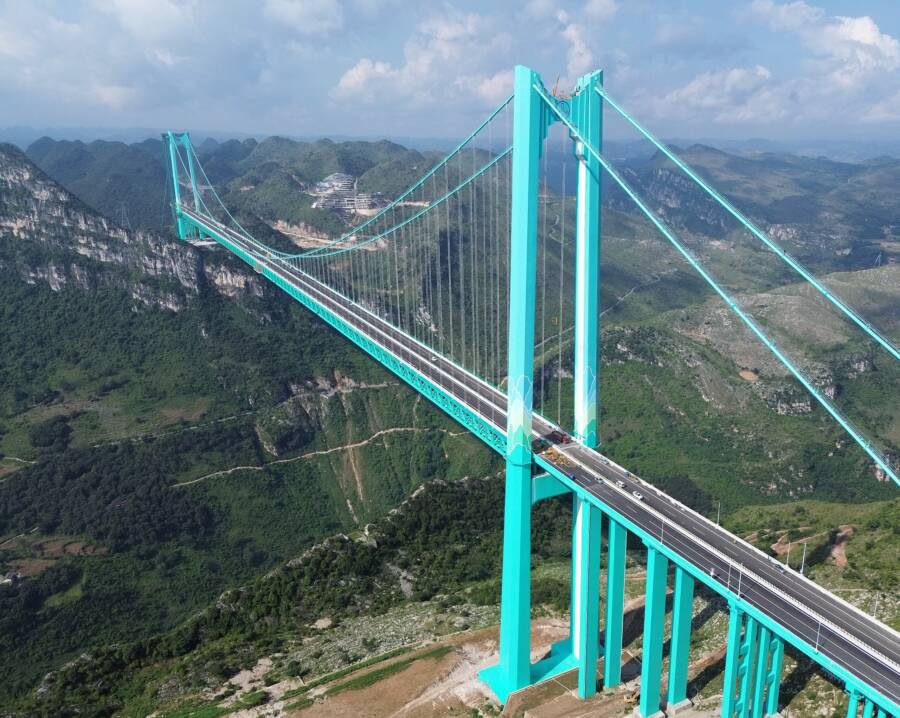
Every now and then I stumble across a piece of engineering that looks less like reality and more like science fiction concept art.
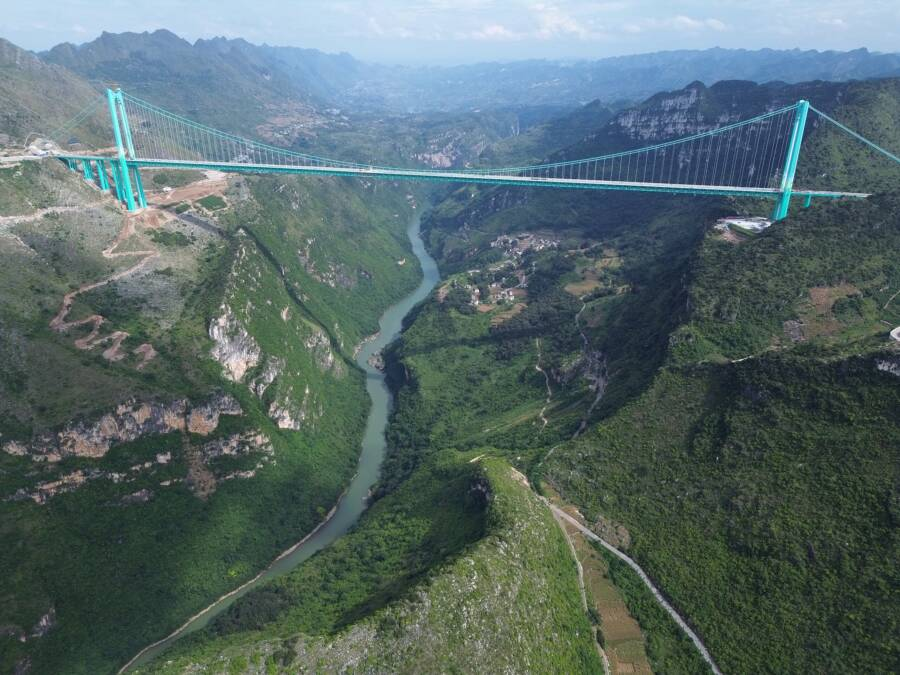
This week it was the Huajiang Grand Canyon Bridge in China, a structure so enormous and improbable-looking that my first reaction was disbelief. The bridge spans a canyon that once required a two-hour drive to navigate. The crossing time has dropped to two minutes.
Two hours to two minutes. That’s civilization-altering infrastructure.
The bridge itself is stunning. Suspended high above the canyon floor, it looks almost unreal, as though someone rendered it for a movie about a future colony world. Yet there it is, built by ordinary humans using real materials, real physics, and a tremendous amount of determination.
And that, to me, is where science fiction enters the picture.
Humanity Has a Long History of Building the Impossible
Science fiction readers are accustomed to seeing enormous feats of engineering:
- orbital habitats
- asteroid mining facilities
- floating cities
- planetary transit systems
- space elevators
- wormhole gates
These ideas often feel wildly distant because we instinctively compare them to what exists around us right now. But history suggests we should be careful about declaring anything impossible too quickly.
Railways crossing continents once seemed absurd. Skyscrapers once seemed dangerous and impractical. Commercial air travel once sounded like fantasy. And now they are simply part of the background infrastructure of daily life.
The same thing happens over and over again; first impossible, then difficult, then expensive, then ordinary.
Earth Is the Hard Mode
What struck me while looking at this bridge was not simply the scale of the engineering, but where it was built.
Earth is not an easy environment. Gravity fights everything we do. Weather destroys structures. Mountains resist us. Rivers carve obstacles through landscapes. Logistics become nightmares. Every ton of material has to be lifted, moved, stabilized, and secured against an active planet that is constantly trying to tear things apart.
And yet we still build structures like this. Which raises an interesting science fiction question: If humanity can construct megaprojects inside Earth’s gravity well, what becomes possible once we move beyond it?
Suddenly, concepts like Mars habitats do not feel quite so unrealistic. Asteroid mining starts looking less like fantasy and more like a future industrial problem waiting for enough investment and motivation.
Large orbital habitats begin to resemble the next step in a very long engineering tradition rather than magical technology.
In some ways, building in space may eventually become easier than building on Earth. Lower gravity, abundant solar energy, and effectively unlimited room to expand change the rules considerably.
The real challenge may not be physics. It may simply be deciding the effort is worthwhile.
Science Fiction and the Ordinary Miracle
One of the recurring themes in science fiction is that extraordinary technologies eventually become mundane. Starships become public transit. Artificial gravity becomes background machinery. Wormholes become commuter routes.
In my Hammer Down series, personal wormhole travel has made conventional space travel irrelevant for most people. Humanity no longer experiences space directly. The vastness between worlds has effectively vanished behind infrastructure. And that carries an emotional cost.
The main character, Danny Andela, is subconsciously mourning the loss of space itself. When miraculous technology becomes routine, something changes in the human relationship with wonder.
Perhaps that is the final lesson of projects like this bridge. Right now, we look at it and see the impossible made real. A generation from now, someone will drive across it while thinking about groceries, work deadlines, or what to make for dinner.
The miracle will have become infrastructure.
And if humanity continues pushing outward into space, the same thing may eventually happen there, too.

Latest releases:
The Woman Who Remembered Yesterday
Quiet Like Fire — Aurealis Award Finalist for Best SF Novella!
Solar Whisper