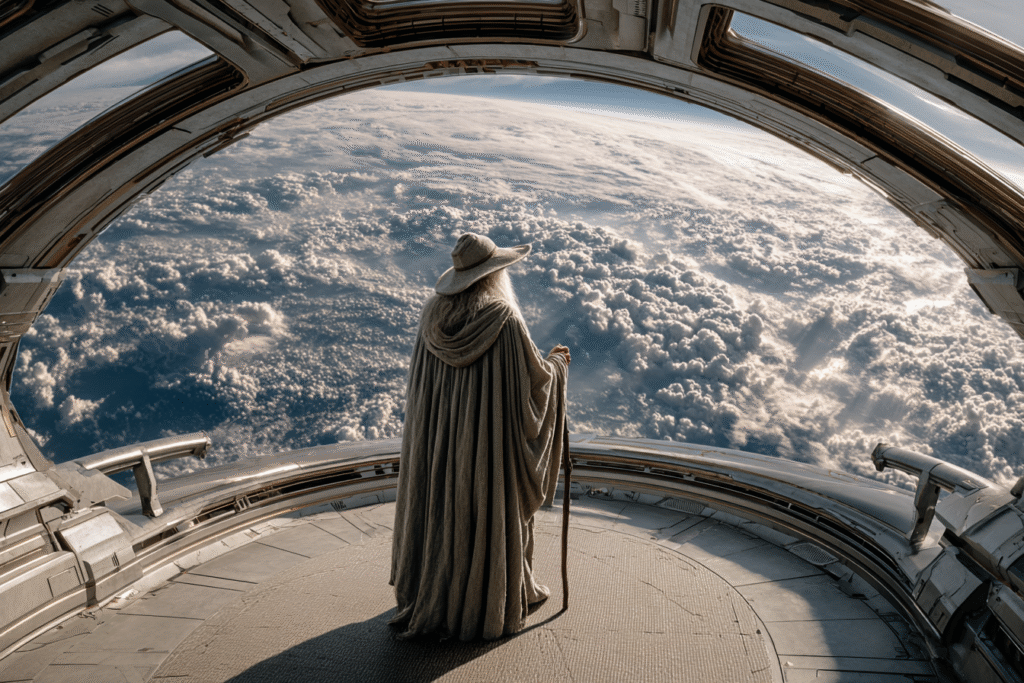
Superheroes, Sanderson, and the Genre Spectrum
Where Does Sci-Fi End and Fantasy Begin?
I’d planned to write this week about Daredevil: Reborn, which I just finished bingeing (spoiler-free, I promise). But somewhere between Matt Murdock’s acrobatics and his quiet conversations with God, I stopped and asked myself: Wait, is this fantasy?
Or is it science fiction? Or is it… something in between?
That little question spun me out. Especially because I’d just read the news that Brandon Sanderson, an author synonymous with epic fantasy, is releasing a new novel in December: Tailored Realities, a clear pivot into the science fiction realm.
When even the architects of genre are changing rooms, maybe it’s time we all ask: What actually separates science fiction from fantasy? And the even thornier follow-up: Does it matter?
Is superhero fiction science fiction?
At first glance, superhero stories look like sci-fi: Mutation. Tech. Radiation. Nanobots. AI. Alternate timelines. But peer a little closer, and you’ll find gods, prophecies, mystical weapons, and ghostly mentors.
What really holds superhero fiction together isn’t how powers are gained — it’s what the story’s trying to say about power.
- Iron Man is science fiction: technology, consequences, hubris.
- Thor is fantasy: myth, lineage, divine identity.
- Daredevil? He walks the tightrope. His abilities might be triggered by radioactive ooze, but the story is about justice, guilt, and moral absolutes. The spiritual overtones tip it toward fantasy.
In that sense, superhero stories don’t fall within sci-fi or fantasy. They blur the line on purpose. They’re genre-fluid by design. They steal the rulebooks and rewrite them as origin stories.
Is SF and fantasy a spectrum?
Let’s borrow a science-fictional metaphor: maybe genres aren’t shelves. They’re coordinates.
Picture this:
- One axis: World logic — from magical to technological.
- Another: Theme — from spiritual to scientific.
- A third: Tone — from mythic to rational.
Plot Tailored Realities and Daredevil on that grid, and you start to see a genre galaxy, not neat little boxes.
Readers don’t necessarily care if something is “hard SF” or “urban fantasy.” We’re not checking the tags, we’re chasing emotional resonance. The thrill of the impossible. The questions that live under the story’s skin.
Sanderson crossing into sci-fi is just one more data point in a larger trend: genres are bending, and we’re all just enjoying the gravitational ride.
What defines genre now?
If you write, read, or even just enjoy speculative fiction, genre definitions are something you bump into all the time, especially when a story doesn’t quite fit.
So here’s one working definition I’ve come to appreciate:
- Science fiction asks: What if this were possible?
- Fantasy asks: What if this were true?
Superhero stories, and Sanderson’s shift, are often asking both at once.
They’re playing in the murky in-between: Where machines act like gods, and gods act like flawed people. Where a man in a suit can punch holes in reality, and a blind lawyer can sense truth better than anyone.
A final thought from the desk of a science fiction author
I write science fiction with space battles, empires, assassins, and AI. I love structure. Systems. Strategy. But I also love when those systems strain against belief. When a character does the impossible because they must.
That’s the heart of both fantasy and sci-fi: exploring other ways of being human.
So when superhero fiction slips between genres, and authors like Brandon Sanderson jump the fence from fantasy to SF, I don’t feel the lines eroding. I feel the genre expanding. Becoming something bigger. More flexible. More honest.
Call it science fiction. Call it fantasy. Call it superhero fiction.
It’s all speculative. And it’s all worth exploring.
Related Reads:
- Brandon Sanderson’s Tailored Realities and the sci-fi shift: https://screenrant.com/brandon-sanderson-tailored-realities-2025-book-cover-reveal
- Why Daredevil is secretly metaphysical fiction (to come)

Pre-order now:
The Woman Who Remembered Yesterday
Latest releases:
Quiet Like Fire — Aurealis Award Finalist for Best SF Novella!
Solar Whisper
Ptolemy Lane Tales Omnibus
Pingback: The Devil in the Details: Daredevil, Fantasy, and the Metaphysical Mask – Cameron Cooper's Science Fiction